
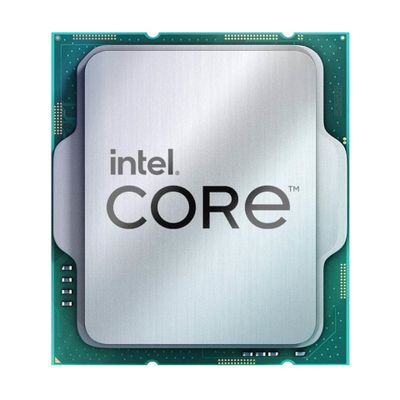
Please login to see the price and order.
Article-No.:
216785
Manufacturer-No.:
CD8069504382100
EAN/GTIN:
8592978278403
WEEE Nummer
DE63917628
Technical specifications
Description
Technical specifications
General
Packaged Quantity
1
Processor
Type
Core i9
Installed Qty
1
Manufacturer
Intel
Clock Speed
3,7 GHz
Processor Number
I9-10900X
Compatible Processor Socket
LGA2066 Socket
Number of Cores
10-core
Manufacturing Process
14 nm
Max Turbo Speed
4,7 GHz
Number of Threads
20 threads
PCI Express Revision
3
PCI Express Lanes Qty
48
Cache Memory
Cache Memory Details
Smart Cache - 19.25 MB
Description
Intel® Virtualization Technology for Directed I/O (VT-d)
Intel® Virtualization Technology for Directed I/O (VT-d) continues from the existing support for IA-32 (VT-x) and Itanium® processor (VT-i) virtualization adding new support for I/O-device virtualization. Intel VT-d can help end users improve security and reliability of the systems and also improve performance of I/O devices in virtualized environments.
Intel® Virtualization Technology (VT-x)
Intel® Virtualization Technology (VT-x) allows one hardware platform to function as multiple “virtual” platforms. It offers improved manageability by limiting downtime and maintaining productivity by isolating computing activities into separate partitions.
Intel® 64
Intel® 64 architecture delivers 64-bit computing on server, workstation, desktop and mobile platforms when combined with supporting software.¹ Intel 64 architecture improves performance by allowing systems to address more than 4 GB of both virtual and physical memory.
Cache
CPU Cache is an area of fast memory located on the processor. Intel® Smart Cache refers to the architecture that allows all cores to dynamically share access to the last level cache.
Intel® AES New Instructions
Intel® AES New Instructions (Intel® AES-NI) are a set of instructions that enable fast and secure data encryption and decryption. AES-NI are valuable for a wide range of cryptographic applications, for example: applications that perform bulk encryption/decryption, authentication, random number generation, and authenticated encryption.
Intel® Turbo Boost Technology
Intel® Turbo Boost Technology dynamically increases the processor's frequency as needed by taking advantage of thermal and power headroom to give you a burst of speed when you need it, and increased energy efficiency when you don’t.
Max Turbo Frequency
Max Turbo Frequency is the maximum single-core frequency at which the processor is capable of operating using Intel® Turbo Boost Technology and, if present, Intel® Turbo Boost Max Technology 3.0 and Intel® Thermal Velocity Boost. Frequency is typically measured in gigahertz (GHz), or billion cycles per second.
Execute Disable Bit
Execute Disable Bit is a hardware-based security feature that can reduce exposure to viruses and malicious-code attacks and prevent harmful software from executing and propagating on the server or network.
Intel® Hyper-Threading Technology
Intel® Hyper-Threading Technology (Intel® HT Technology) delivers two processing threads per physical core. Highly threaded applications can get more work done in parallel, completing tasks sooner.
Intel® Optane™ Memory Supported
Intel® Optane™ memory is a revolutionary new class of non-volatile memory that sits in between system memory and storage to accelerate system performance and responsiveness. When combined with the Intel® Rapid Storage Technology Driver, it seamlessly manages multiple tiers of storage while presenting one virtual drive to the OS, ensuring that data frequently used resides on the fastest tier of storage. Intel® Optane™ memory requires specific hardware and software configuration.
Enhanced Intel SpeedStep® Technology
Enhanced Intel SpeedStep® Technology is an advanced means of enabling high performance while meeting the power-conservation needs of mobile systems. Conventional Intel SpeedStep® Technology switches both voltage and frequency in tandem between high and low levels in response to processor load. Enhanced Intel SpeedStep® Technology builds upon that architecture using design strategies such as Separation between Voltage and Frequency Changes, and Clock Partitioning and Recovery.
Intel® Deep Learning Boost (Intel® DL Boost) on CPU
A new set of embedded processor technologies designed to accelerate AI deep learning use cases. It extends Intel AVX-512 with a new Vector Neural Network Instruction (VNNI) that significantly increases deep learning inference performance over previous generations.
Instruction Set Extensions
Instruction Set Extensions are additional instructions which can increase performance when the same operations are performed on multiple data objects. These can include SSE (Streaming SIMD Extensions) and AVX (Advanced Vector Extensions).
Intel® Turbo Boost Max Technology 3.0 Frequency
Intel® Turbo Boost Max Technology 3.0 identifies the best performing core(s) on a processor and provides increased performance on those cores through increasing frequency as needed by taking advantage of power and thermal headroom. Intel® Turbo Boost Max Technology 3.0 frequency is the clock frequency of the CPU when running in this mode.
Intel® Turbo Boost Max Technology 3.0
Intel® Turbo Boost Max Technology 3.0 identifies the best performing core(s) on a processor and provides increased performance on those cores through increasing frequency as needed by taking advantage of power and thermal headroom.
# of AVX-512 FMA Units
Intel® Advanced Vector Extensions 512 (AVX-512), new instruction set extensions, delivering ultra-wide (512-bit) vector operations capabilities, with up to 2 FMAs (Fused Multiply Add instructions), to accelerate performance for your most demanding computational tasks.
Recommend
Information on Product Safety
Information on Product Safety
Manufacturer information
Company Name
Intel Corporation
Address
Am Campeon 10
85579 Neubiberg DE
info.de@intel.com
EU Responsible Person
Name
Intel Corporation
Address
Am Campeon 10
85579 Neubiberg DE
info.de@intel.com